Did AI write the reviews on NomadBadge?
No. AI can help with build speed, structure, and starting shells, but the useful part of the guide still comes from people who actually worked at the place and left a field report.
Build fast, trust slow
AI helped us build faster. It did not visit cafes, test WiFi, or decide whether a place still works at 3pm. Those calls belong to people who were there.
By Tim & Thomas 4 min read Updated 13 Jul 2026
2 founders
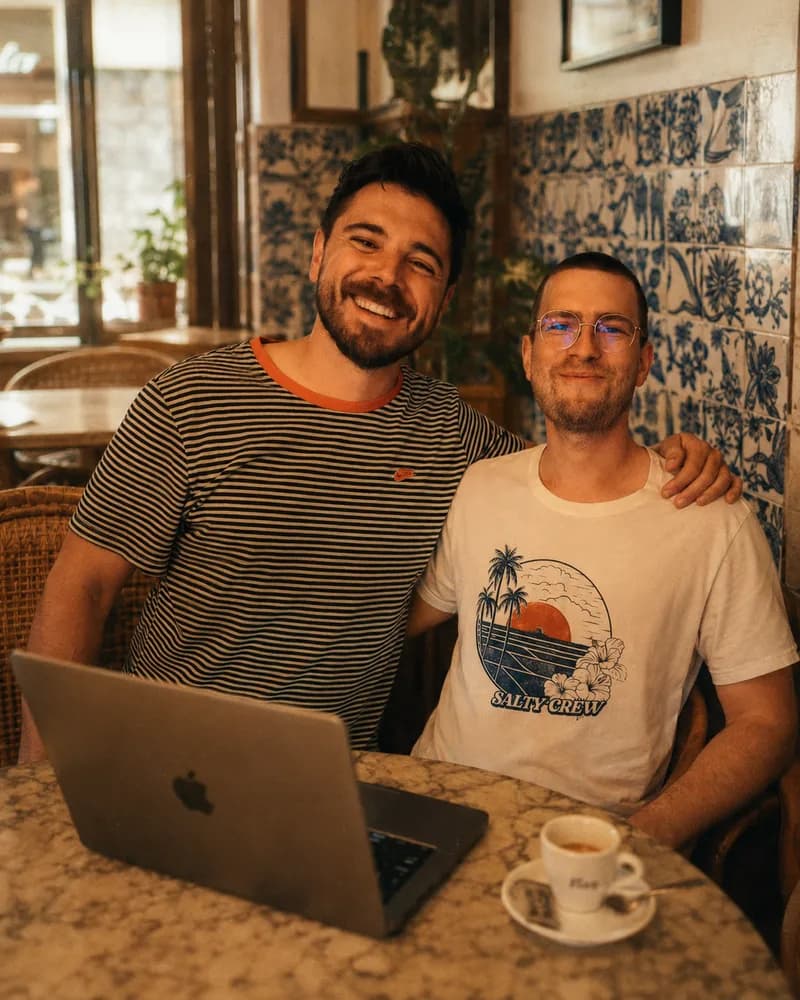
Tim and Thomas can kickstart the shell, but not fake the field work.
240+ venues
The guide is already large enough that trust matters more than bulk.
1 first review
That is the moment a place starts becoming useful for someone else.
The short answer
Yes, we used AI to build NomadSpots faster. No, we do not want AI to fake the part that matters. Public data and AI can help kickstart a shell. The useful part still starts when real people leave field reports about WiFi, outlets, noise, calls, and whether the place actually worked for a day of remote work.
The boundary
Only if it stays in its lane. The build job and the trust job are not the same thing.
Tim and I are fine using AI where it removes grind. That part feels obvious. Two people can build more in less time when code, rough copy, and repetitive setup move faster.
The harder part is knowing where to stop. If AI starts pretending it knows which places are good for work, the product loses the one thing that makes it worth opening in the first place.
That is why we keep coming back to the same line: AI can help us build the room. The community has to tell us whether the room is telling the truth.
What we used it for
Mostly the parts that would be boring to do slowly by hand, not the parts that should earn trust.
We used it where it saves boring effort: code, copy drafts, structure, and getting a rough version on screen faster.
A place is not proven because a model found a pin or because a founder liked the idea. It becomes useful when someone leaves a work report after actually being there.
Feature requests, fixes, and better review habits are not side noise. They are how this stops becoming a founder project and turns into something nomads shape for each other.
Where trust starts
Not when it appears on a map. When someone who actually worked there leaves a report another nomad can use today.
A place can begin as a starting point: a name, a pin, opening hours, maybe a useful hint that it could be worth checking. That is fine. It saves time.
But nobody should confuse that with proof. Proof starts when someone says, in plain language, what held up and what did not. Good WiFi. Back table with power. Too loud after noon. Fine for email, bad for calls.
That is the hand-picked part. Not that Tim and I personally bless every venue as some final authority. We kickstart it, moderate it, and try to keep the standards honest while the community adds the real weight.
A useful first report should tell me
Would I walk there with a laptop today?
That is the real question behind the whole product.
What kind of work does it support?
Quick inbox hour, deep work block, or one call before moving on.
What is the one thing that could ruin it?
The downside keeps the note honest and keeps the guide useful.
Open invitation
The best feedback usually comes from friction. Something felt missing, stale, too vague, or too slow.
If you worked somewhere good, add it with the useful details. That helps more than another generic top ten list.
A place can drift fast. If the hours changed, the laptop mood changed, or the quiet corner disappeared, that update matters.
The best requests come with context: what city you were in, what you were trying to do, and where the current flow got in your way.
FAQ
No. AI can help with build speed, structure, and starting shells, but the useful part of the guide still comes from people who actually worked at the place and left a field report.
Because building the product and proving the places are two different jobs. AI can speed up code, drafts, and repetitive setup work. It cannot sit in a cafe, test the WiFi, or tell you if the room turns loud after lunch.
Sometimes it can start as a suggestion or a shell. That is only a starting point. The trust layer begins when someone adds the first real work report.
No. The goal is not to let an AI guess which place feels best for work. The goal is to let the community add and update the details that matter: WiFi, outlets, noise, calls, and whether the place still holds up.
Yes. That is the whole point. People can add places, correct stale details, report bugs, and send feature requests that come from actual use instead of abstract brainstorming.
Help shape the next version
If you have a better place, a stale detail, a bug, or a feature wish that came from real use, send it. That is how this gets better.